
.png)
.webp)
August 20, 2026
How Website Development Improves User Experience and Conversions
You spend weeks crafting the perfect ad. The creative is sharp. The targeting is dialed in. The campaign goes live and traffic starts flowing in. And then... nothing. Inquiries are quiet. Sales don't move. You blame the ads. But have you actually sat with your website , on mobile, the way a real user would — and tried to use it?
Nine times out of ten, the ad wasn't the problem.
First impressions happen in milliseconds, not minutes
A website user decides whether to stay or leave in roughly three seconds. Not three minutes. Three seconds. And in that window, they're not reading your copy or evaluating your services — they're feeling something. Does this feel credible? Does this feel current? Does this feel safe?Slow load times, dated design, or a layout that doesn't adapt to mobile — any one of these can kill that feeling instantly. And once someone bounces, they're gone. They found a competitor while your page was still loading.
This is why website development isn't a cosmetic exercise. It's a business-critical function.
Speed isn't a luxury feature. It's table stakes.
Google has been explicit about this for years — page speed is a ranking factor. But more importantly, real users hate waiting. A one-second delay in load time can reduce conversions by 7%. That sounds small until you do the math on what you're spending on traffic. Clean code, optimized images, efficient hosting, browser caching — none of this is glamorous, but all of it directly affects how many people actually stay on your site long enough to take action. A fast website is an invisible competitive advantage. Users don't notice it. They just stay.
Mobile isn't a secondary experience anymore
Over 70% of internet traffic in India is on mobile. If your website still treats mobile as an afterthought — smaller text, broken layouts, buttons that are too close together to tap accurately — you are actively damaging your business. Responsive design isn't about shrinking a desktop site onto a phone screen. It's about rethinking the experience entirely for how people actually use their phones. Thumb- friendly navigation. Tap targets that work. Content that loads without horizontal scrolling. These are not optional refinements — they're the baseline.

Navigation is UX, and bad UX is a conversion killer
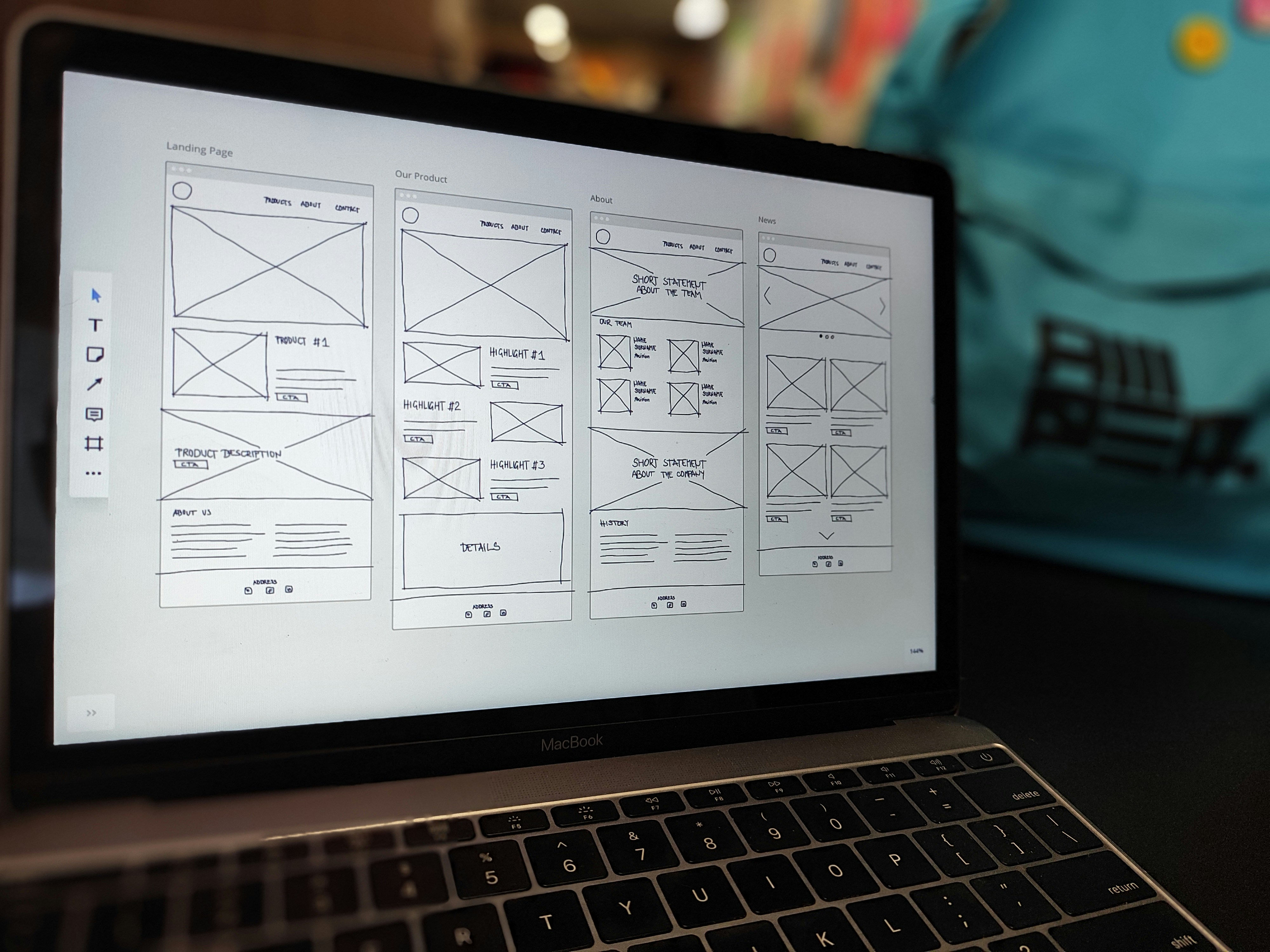
Ask yourself this: if someone lands on your homepage right now, how many clicks does it take them to understand what you do, what it costs, and how to reach you? Every unnecessary click is a drop-off risk. Confused users don't convert — they leave. Good website development creates a logical information hierarchy that guides users from curiosity to action without them ever feeling lost. Clear menus. Logical page flow. Calls to action that tell users exactly what happens when they click. These aren't design opinions — they're conversion fundamentals.
Design builds trust before a single word is read
Humans make visual judgments instantly. A website that looks polished and professional triggers trust before a user has processed a single line of your copy. A website that looks like it was built in 2014 does the opposite — even if your product is genuinely excellent.Consistent branding, quality imagery, clean typography, thoughtful spacing — these are signals. They tell the visitor that this business takes itself seriously, which makes them more likely to take you seriously.
Your website should be guiding users somewhere — always
Every page on your website should have a purpose and a direction. A user reads your case study — then what? They browse your services — what's the logical next step? Good website development answers these questions structurally, through well-placed CTAs, internal linking, and page flow that nudges users toward conversion. The difference between a website that 'looks nice' and one that actually generates business is almost always this: intentionality. Every element placed with a purpose. Every page designed to move someone closer to a decision.
SEO and conversions aren't separate conversations
A well-developed website ranks better — faster load times, mobile optimization, clean site architecture, proper heading structure — all of these are things Google rewards. More visibility means more traffic. Better UX means more of that traffic converts.
These two goals aren't in conflict. The same development principles that make Google happy make users happy. That's not a coincidence — it's by design.
The website is where attention becomes revenue
Every marketing effort — your ads, your content, your SEO, your influencer campaigns — ultimately points somewhere. Usually, it points to your website. If that destination doesn't deliver, everything upstream is wasted.
A website is not a digital brochure. It's a business tool. Treat it like one.


%20(1).png)